Goodman HVAC Repair in Chicago
Trust Pro has been servicing Goodman heating and cooling systems across the Chicago area for years, building hands-on experience with one of the most commonly installed HVAC brands in the region. From entry-level central air conditioners to full split-system heat pumps, our technicians understand how Goodman equipment behaves over time, what typically goes wrong, and how to diagnose it efficiently. Whether your system is struggling on a humid July afternoon or failing to keep up during a February cold snap, Trust Pro provides honest, straightforward repair service without unnecessary upselling.
Our Experience With Goodman
Goodman equipment is installed in an enormous number of Chicago-area homes and light commercial buildings, which means our technicians have worked on these systems repeatedly across many model generations. We're familiar with the brand's standard control board configurations, the compressor types commonly used across their product lines, and the cabinet designs that can sometimes complicate component access. We also understand Goodman's reputation for reasonable value — parts are generally available and affordable, which often makes repair a genuinely viable option. Our technicians diagnose these units realistically, factoring in age, refrigerant type, and the actual cost of the needed repair before making any recommendation.
Common Goodman Problems We See
- Goodman air conditioner runs but house won't cool down below 78 degrees
- Goodman furnace ignites but shuts off after a few minutes of running
- Outdoor Goodman condenser unit makes loud humming noise but fan doesn't spin
- Goodman heat pump blowing room-temperature air in heating mode
- Goodman AC freezing up with ice forming on the refrigerant lines
- Goodman furnace pressure switch tripping and causing a no-heat lockout
- Goodman system short-cycling — turning on and off every few minutes
- Goodman thermostat calls for cooling but outdoor unit never turns on
How We Diagnose Goodman Issues
System Inspection and Symptom Verification
Our technician starts by confirming the reported symptom under real operating conditions — running the system through a full call for heating or cooling. This step also includes a visual inspection of the cabinet, electrical connections, and any visible components for signs of obvious damage, corrosion, or wear that might point toward the root cause before instruments are used.
Electrical Component Testing
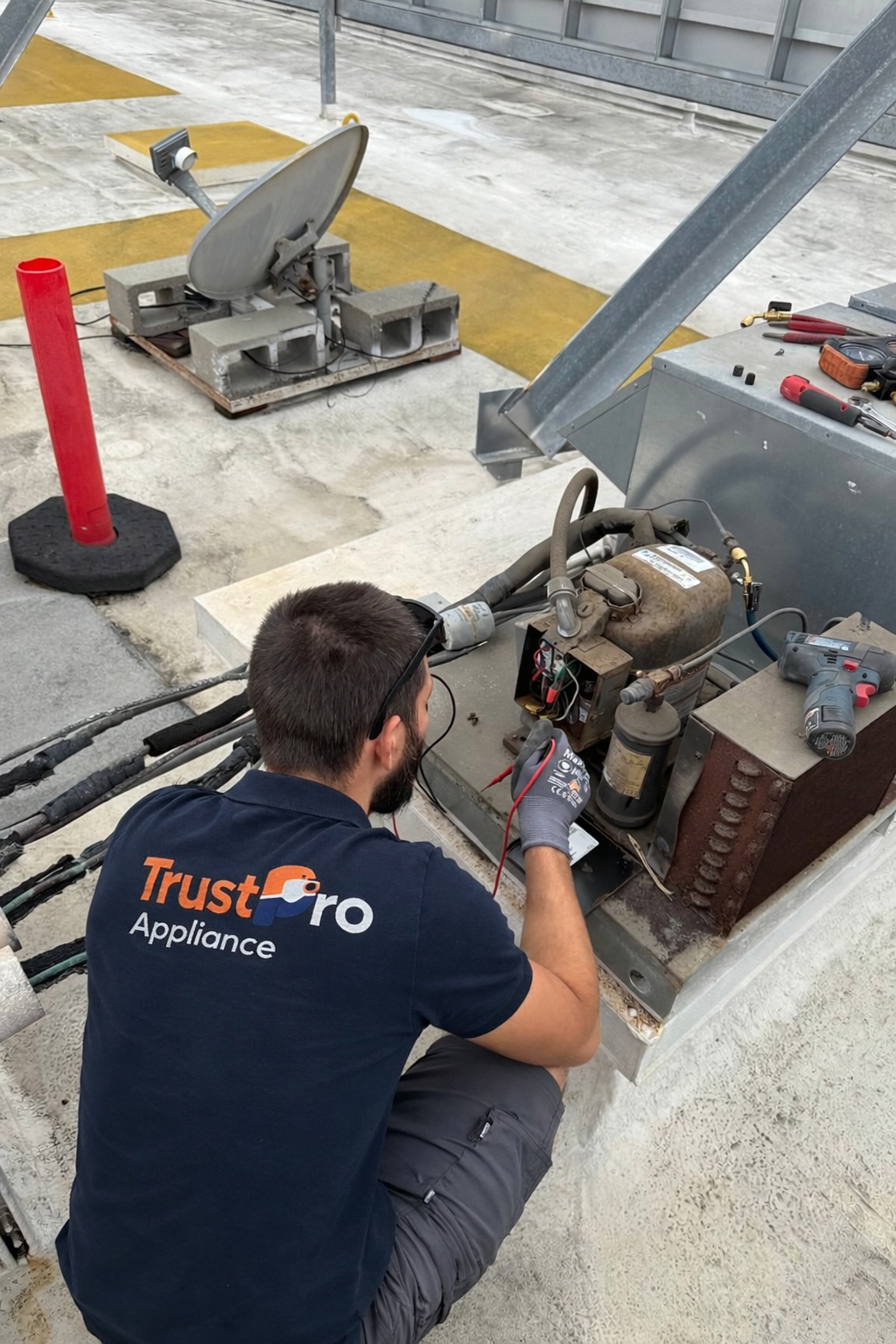
Capacitors, contactors, and control boards are among the most common failure points on Goodman equipment. We test capacitors for proper microfarad ratings, inspect contactors for pitting and wear, and check the control board for fault indicators or burned components. Many no-start and short-cycling complaints trace directly back to one of these electrical components failing under load.
Refrigerant System Evaluation
For cooling complaints, we measure system pressures and compare them against expected operating parameters for current conditions. Low pressure often indicates a refrigerant leak rather than simple undercharge. We inspect accessible line connections, the evaporator coil, and the outdoor unit coil for signs of oil residue or leak points, and we document refrigerant type before any recovery or recharge work.
Heat Exchanger and Combustion Check (Furnace)
On Goodman gas furnaces, we inspect the heat exchanger for cracks or stress fractures, verify proper burner ignition and flame characteristics, and test the inducer motor and pressure switch operation. A cracked heat exchanger is a safety issue that warrants honest discussion about repair versus replacement, particularly on older furnaces that may have limited remaining service life.
Maintenance Tips for Goodman
- Replace the air filter every one to three months — restricted airflow is the leading cause of Goodman coil freeze-ups and efficiency loss.
- Keep the outdoor condenser coils clear of grass clippings, cottonwood, and debris, especially during Chicago's heavy summer shedding season.
- Schedule a professional tune-up each spring and fall to catch capacitor and contactor wear before they cause a failure during peak demand.
- Check condensate drain lines annually — Goodman air handlers can develop algae blockages that cause water damage or system shutdowns.
- Verify that refrigerant lines are properly insulated where they enter the home — deteriorated insulation reduces efficiency and can contribute to freeze-up.
Repair or Replace Your Goodman System?
Goodman is a solid mainstream brand, and repair is often the right call — especially for units under ten to twelve years old where parts are readily available and affordable. If your system is younger and the repair cost is a reasonable fraction of replacement cost, fixing it usually makes sense. As units push past twelve to fifteen years, or if R-22 refrigerant is involved, the math shifts. An aging system with a major compressor failure or a cracked heat exchanger is usually a stronger candidate for replacement. We'll give you honest numbers so you can decide.
New Goodman equipment typically comes with a manufacturer's limited parts warranty, but coverage depends on registration, installation, and the specific component. Trust Pro is an independent service company and does not administer manufacturer warranties. However, we back all of our own repair work with a parts and labor warranty so you have clear protection on what we've done.
Goodman Repair FAQs
How long does a Goodman HVAC system typically last?
A well-maintained Goodman central air conditioner or heat pump generally lasts between fifteen and twenty years under normal use. Furnaces often reach similar lifespans. Chicago's temperature extremes put real demands on HVAC equipment, so systems that run hard through hot summers and cold winters may land toward the lower end of that range without consistent annual maintenance.
Why does my Goodman furnace keep shutting off shortly after it starts?
Short cycling on a Goodman furnace most commonly points to a tripped pressure switch, a failing inducer motor, a blocked flue or condensate drain, or an overheating condition caused by restricted airflow. Control board faults can also produce this symptom. Because several different components can cause the same behavior, proper diagnosis with the right instruments is important before replacing any parts.
Does Trust Pro service Goodman systems throughout the Chicago area?
Yes — Trust Pro serves homeowners and light commercial customers across Chicago and the surrounding suburbs. Goodman equipment is extremely common in this region, and our technicians work on these systems regularly throughout the service area. We're familiar with how Chicago's seasonal extremes affect these units and what failure patterns tend to show up after heavy summer cooling or sustained winter heating demand.
What typically affects the cost of a Goodman repair?
Repair cost depends on which component has failed, the age of the unit, and whether refrigerant work is involved. Capacitors and contactors are inexpensive parts with relatively low labor cost. Control boards and motors run higher. Compressor replacement on an older unit can approach or exceed the value of the system itself, which is where an honest repair-versus-replace conversation becomes important.
Goodman Repair by Neighborhood
Why Choose Trust Pro for Goodman
Goodman owners in the Chicago area choose Trust Pro because we give them a straight answer. We show up, run a proper diagnosis, and tell you honestly whether the repair makes financial sense given your unit's age and condition. We don't push replacements when a repair will give you several more good years, and we don't perform Band-Aid fixes when a system is genuinely at the end of its life. Our work is backed by a parts and labor warranty, and our pricing is transparent from the start.